Why Chewing Your Food Properly Matters More Than You Think
In a world where we're constantly on the go, eating has become something we squeeze into our busy schedules rather than something we truly experience. Breakfast is eaten on the commute, lunch is finished between meetings, and dinner often disappears while scrolling through our phones.
While it may seem harmless, eating too quickly can impact far more than just your digestion.
Something as simple as slowing down and chewing your food properly can support digestion, improve nutrient absorption, help regulate appetite, and encourage a healthier relationship with food. Sometimes the smallest habits create the biggest long-term changes.
1. Supports Healthy Digestion
Digestion doesn't begin in your stomach—it begins the moment food enters your mouth.
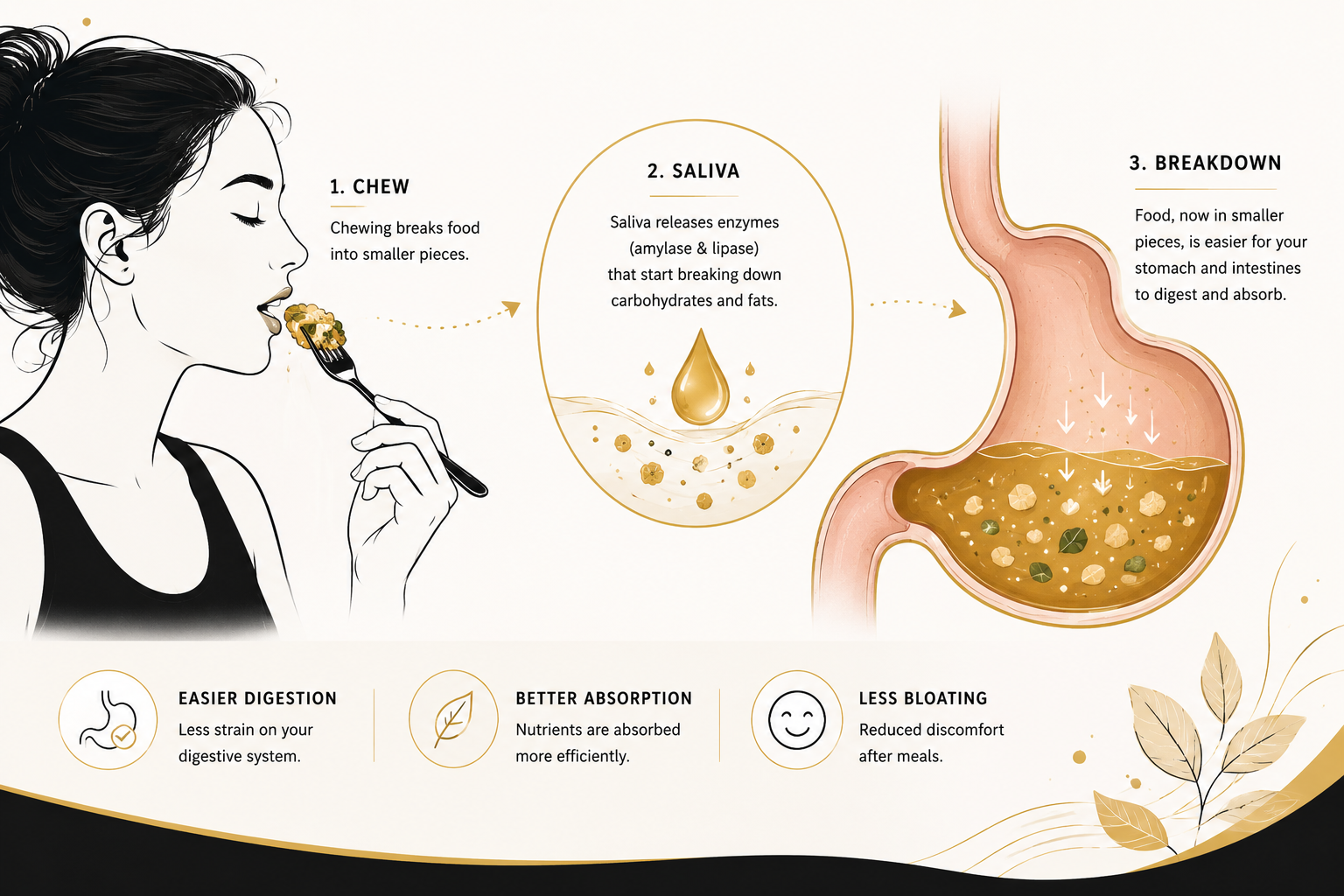
Chewing breaks food into smaller pieces, making it easier for your digestive system to process. At the same time, saliva is released, containing enzymes that begin breaking down carbohydrates and fats before they even reach your stomach.
When food is swallowed too quickly, your stomach has to work much harder to break it down. This may contribute to bloating, discomfort, and indigestion after meals.
Taking a little longer to chew allows your digestive system to work more efficiently from the very beginning.
2. Improves Nutrient Absorption
The more thoroughly food is broken down, the easier it is for your body to extract the vitamins, minerals, and nutrients it contains.
Larger food particles are more difficult for digestive enzymes to process, which means some nutrients may not be absorbed as effectively.
By chewing each mouthful properly, you maximise the surface area available for digestion, helping your body get the most from every nutritious meal.
3. Helps Prevent Overeating
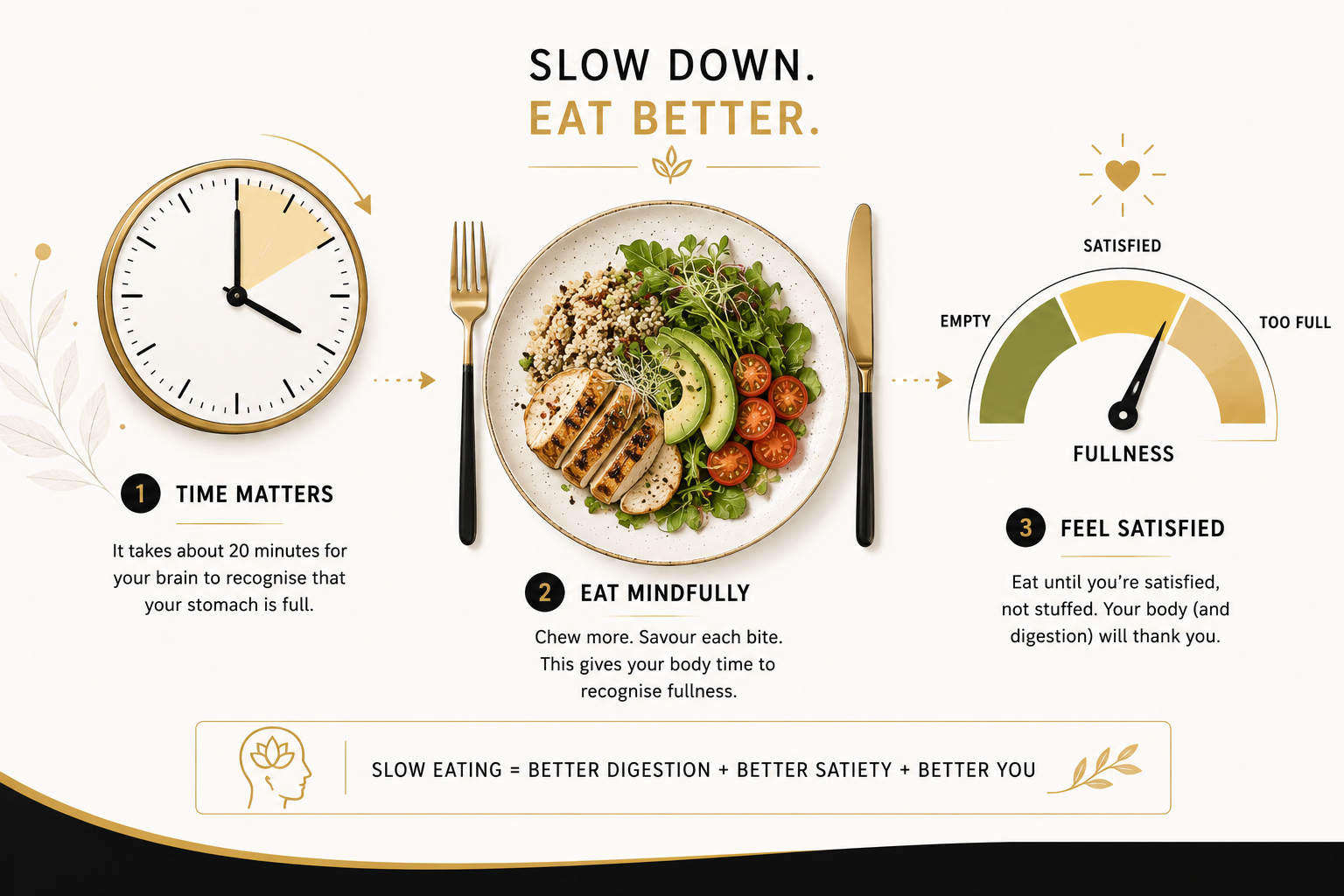
Your stomach and brain don't communicate instantly.
It generally takes around 20 minutes for your brain to recognise that you've eaten enough. When meals are rushed, it's easy to consume far more food than your body actually needs before those fullness signals arrive.
Eating more slowly naturally gives your body time to recognise satiety, making it easier to stop when you're comfortably full rather than overly stuffed.
This simple habit can become a valuable tool for anyone working towards fat loss, weight maintenance, or healthier eating habits.
4. Increases Meal Satisfaction
Have you ever finished a meal and wondered where it went?
When you slow down, you're more likely to notice the flavours, textures, and aromas of your food. This creates a more enjoyable eating experience and often leaves you feeling more satisfied—even without eating more.
Rather than eating on autopilot, chewing thoroughly encourages you to appreciate your meal and become more connected with your body's hunger and fullness cues.

5. Reduces Digestive Discomfort
Swallowing large pieces of food can place unnecessary strain on your digestive system.
Poorly chewed food may contribute to symptoms such as:
Bloating
Indigestion
Feeling overly full
Acid reflux in some individuals
Eating at a slower pace allows digestion to occur more naturally and comfortably, reducing the likelihood of post-meal discomfort.
6. Supports Better Oral Health
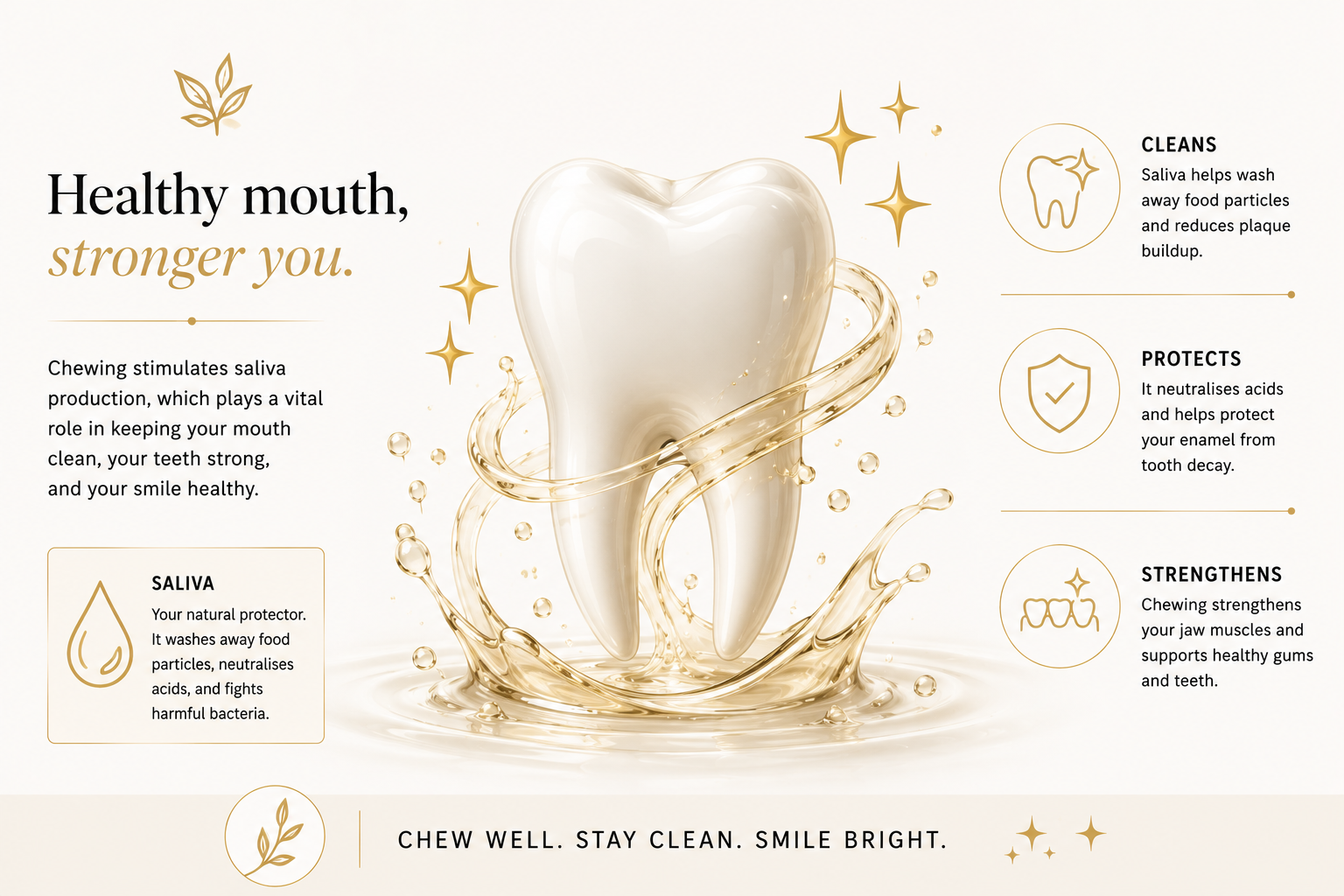
Chewing doesn't just benefit your digestive system—it also supports a healthy mouth.
The increased production of saliva helps:
Wash away food particles
Neutralise acids that can damage teeth
Reduce harmful bacteria
Protect tooth enamel
Regular chewing also helps maintain healthy jaw muscles, contributing to overall oral function.
7. Encourages Mindful Eating
Mindful eating is simply paying attention while you eat.
Instead of rushing through meals or eating while distracted, slowing down allows you to become more aware of your hunger levels, food choices, and eating habits.
Many people find that mindful eating helps reduce emotional eating, improves portion control, and makes meals feel far more enjoyable.
Sometimes, simply putting your fork down between bites can make a noticeable difference.

Simple Tips to Slow Down
If you're used to eating quickly, don't worry—you don't need to count every chew.
Instead, try these simple habits:
Put your fork or spoon down between bites.
Finish chewing before taking another mouthful.
Minimise distractions such as phones or television.
Take smaller bites.
Focus on enjoying the taste and texture of your food.
These small changes can naturally slow your eating pace without making meals feel like a chore.
Final Thoughts
Chewing your food properly is one of the simplest health habits you can improve, yet it's often overlooked.
By slowing down, you support healthier digestion, improve nutrient absorption, enhance feelings of fullness, and create a more mindful eating experience. While chewing alone isn't a magic solution, combining this habit with balanced nutrition, regular exercise, quality sleep, and good hydration can make a meaningful difference to your overall health.
The next time you sit down to eat, give yourself permission to slow down. Your digestive system—and your body—will thank you.