
EMS Training in Sydney: What to Expect From Your First Whole-Body EMS Session
If you have seen people exercising in a fitted EMS suit and wondered what it actually feels like, you are not alone. Whole-body electrical muscle stimulation—usually shortened to whole-body EMS or WB-EMS—is becoming a popular option for people looking for a guided, time-conscious training experience.
But EMS is not a magic shortcut, and your first session should never begin with the intensity turned all the way up. A safe, well-coached experience starts with screening, explanation and gradual familiarisation.
This guide explains how whole-body EMS works, what happens during an introductory session and what to consider when choosing EMS training in Sydney.
What Is Whole-Body EMS Training?
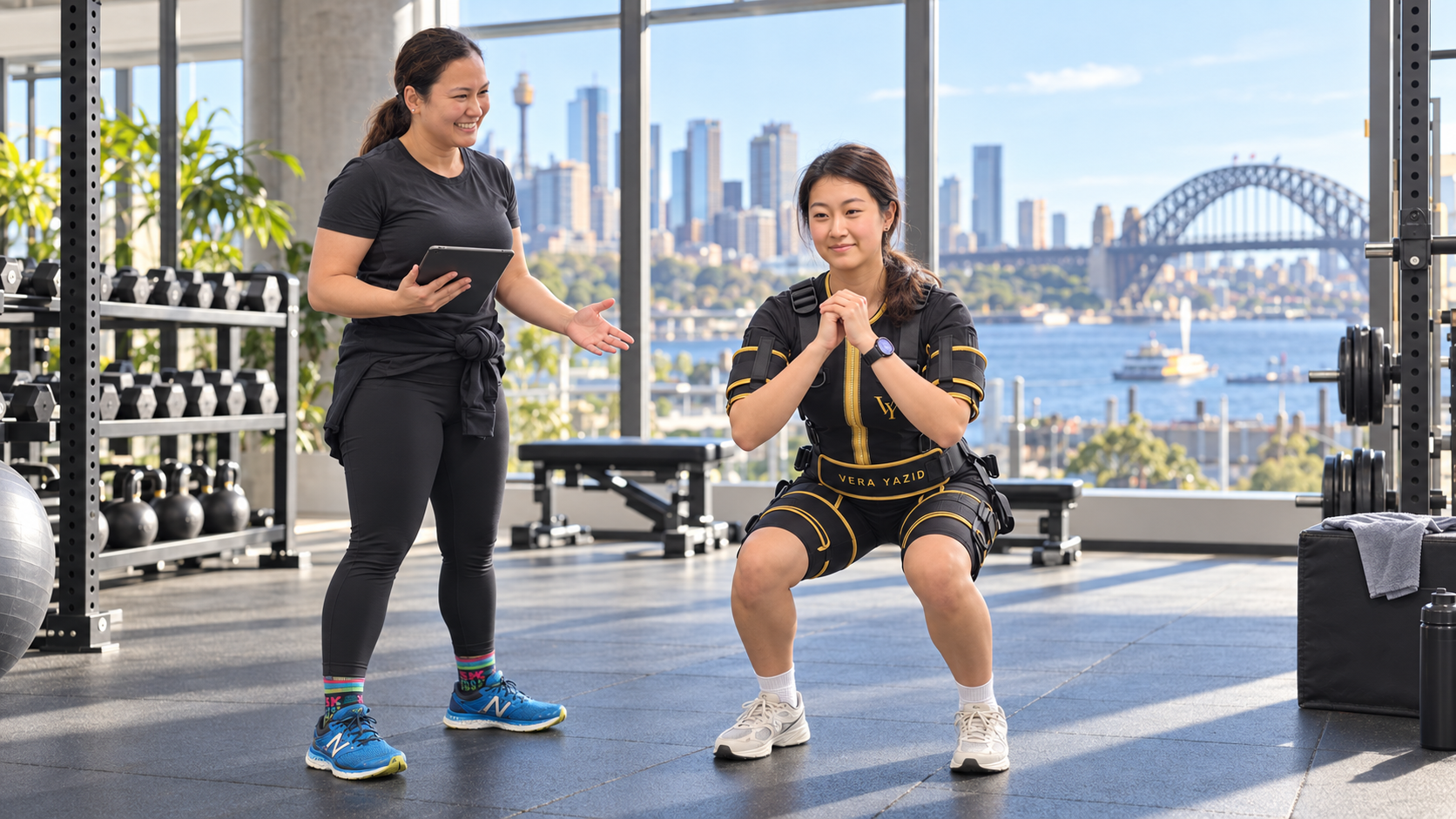
EMS stands for electrical muscle stimulation. During a whole-body EMS session, you wear a specially designed suit containing electrodes positioned over major muscle groups. The system sends controlled electrical impulses to those areas while the trainer adjusts the intensity for your individual comfort and response.
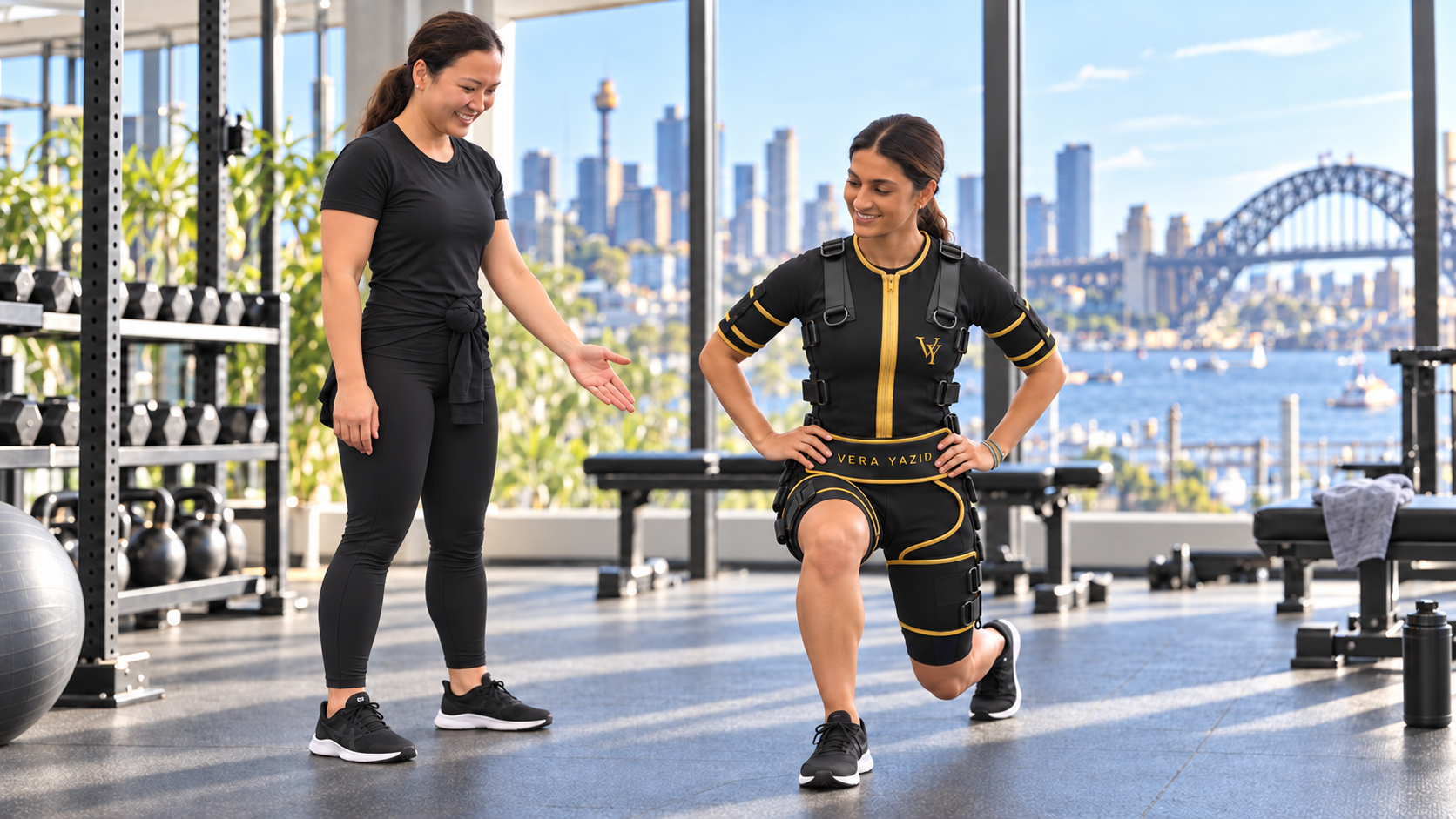
In an active EMS workout, the stimulation is combined with simple guided movements such as squats, hinges, presses or core exercises. The movements do not need to be complicated. The aim is to maintain good technique while the stimulation adds another training input.
The sensation is often described as a firm pulsing or contracting feeling. It should feel noticeable, but it should not feel sharp or painful. Because each area can be adjusted individually, honest communication with your trainer is essential throughout the session.
What Happens During Your First EMS Session?
A professional introductory session should give you time to understand the equipment rather than rush you into a hard workout.
1. Health and contraindication screening
Before using EMS, you should complete a health questionnaire and discuss relevant medical conditions, medications, injuries and implanted devices. Whole-body EMS is not suitable for everyone. Pregnancy and certain medical conditions or active medical implants can be contraindications, while some circumstances may require written medical clearance.
Screening is not a formality. It helps determine whether EMS is appropriate for you and gives your trainer information needed to plan the session safely.
2. Goal and training discussion
Your trainer should ask what you want from the experience. You may be interested in adding variety to your training, improving general strength and fitness, learning better movement patterns or trying a more time-conscious style of exercise.
Your current activity level also matters. Someone new to exercise should not receive the same session as an experienced lifter, even if both are new to EMS.
3. Suit fitting and setup
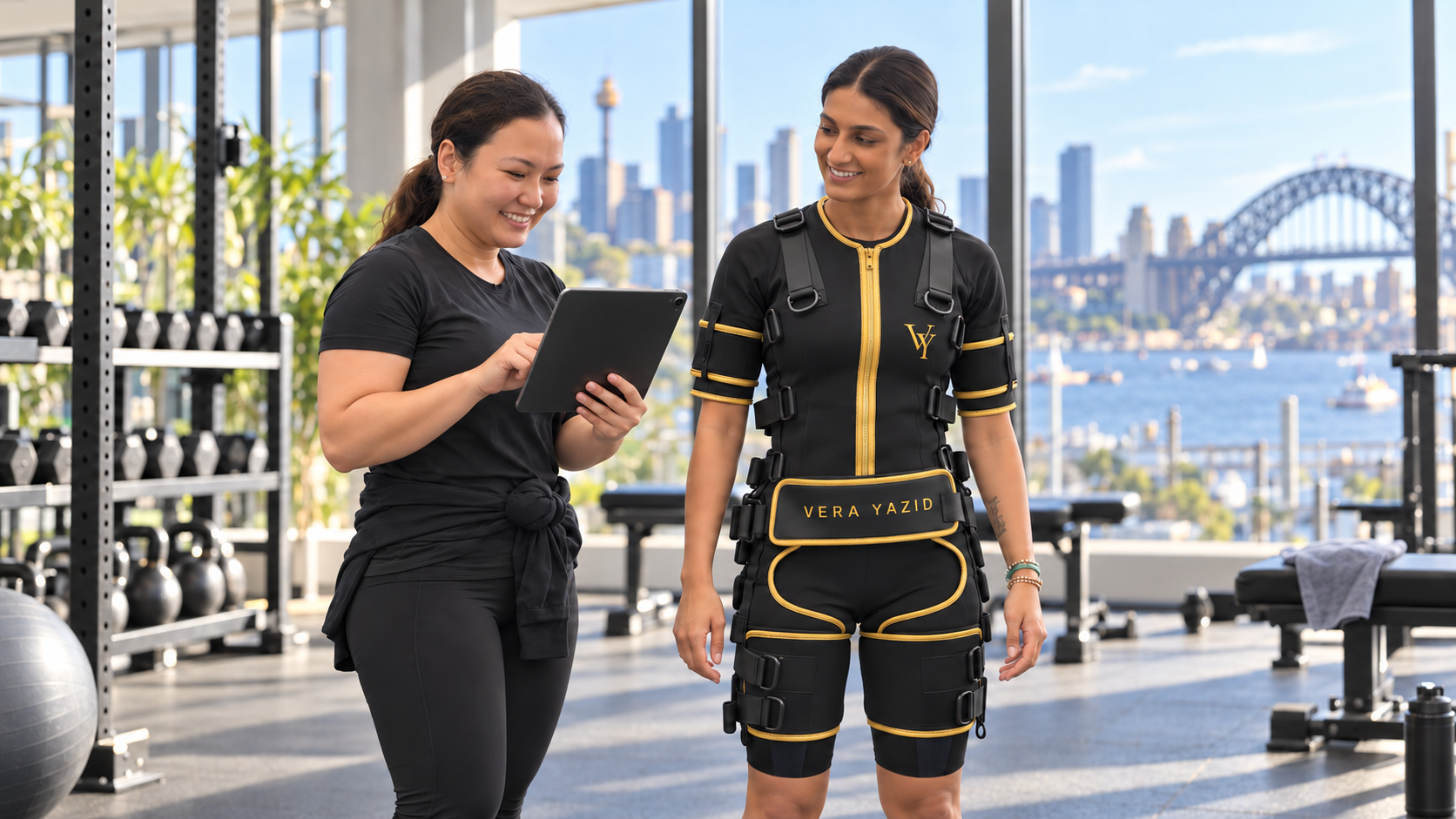
The EMS suit needs to fit securely so that the electrode areas maintain consistent contact with the body. Your trainer will explain how the system works, check the fit and show you what to expect before increasing any stimulation.
Vera's system uses a wireless connection to the control device, allowing you to perform guided movements without loose external wires restricting the exercise area.
4. Gradual familiarisation
The intensity should begin conservatively and increase gradually, one muscle area at a time. A responsible trainer will ask how each area feels and continue checking your effort, comfort and movement quality.
International expert recommendations emphasise close supervision, careful preparation of new participants, contraindication screening and ongoing communication. This is why a one-to-one introductory session is valuable: the trainer can focus fully on your response instead of applying a standard setting to everyone.
5. A simple, coached workout
Once you are comfortable with the sensation, you may perform a short sequence of controlled exercises. Your first session is an introduction, not a test of how much discomfort you can tolerate.
Expect clear coaching, manageable movements and regular check-ins. If anything feels unusual, painful or overwhelming, tell your trainer immediately so the stimulation can be reduced or stopped.
How Is EMS Different From a Normal Gym Workout?
Traditional strength training uses resistance such as dumbbells, cables, machines or body weight. Active EMS adds externally generated electrical stimulation while you move. They are different training experiences, and one does not automatically replace the other.
EMS may appeal to people who:
Prefer a closely supervised one-to-one session
Want a structured and time-conscious workout
Enjoy trying technology-supported training
Feel unsure about exercising alone in a gym
Want another option to complement their current routine
Traditional resistance training remains valuable for developing skills, progressively lifting external loads and building confidence across a wide range of movements. Depending on your goals, EMS can sit alongside conventional exercise rather than compete with it.
Can EMS Help With Strength or Body Composition?
Research into whole-body EMS is developing. Reviews have reported potential improvements in measures such as muscle mass and strength in some populations and under particular training protocols. Results are not identical across every study, and outcomes depend on factors including the program, intensity, nutrition, consistency and the participant's starting point.
That means EMS should not be advertised as effortless weight loss or a guaranteed body transformation. It is still a training stimulus. Sustainable results require realistic expectations and consistent habits, including appropriate movement, recovery and nutrition.
Is Whole-Body EMS Safe?
Whole-body EMS can create a substantial training stimulus, so more intensity is not always better. Published expert guidance warns that inappropriate or excessively intense application—particularly during an initial session—can increase the risk of adverse effects.
Safer practice includes:
Pre-session health and contraindication screening
Qualified, attentive supervision
Conservative intensity for new participants
Continuous communication during the session
Adequate recovery between demanding EMS workouts
Stopping immediately if adverse symptoms occur
You should arrive well hydrated, avoid exhausting exercise immediately beforehand and tell your trainer about any change in your health. If you are unsure whether EMS is appropriate for you, seek advice from your doctor before booking.
EMS offered in a fitness setting is a non-medical service. It is not physiotherapy, medical treatment or a substitute for care from an appropriately qualified health professional.
How Should You Prepare for Your First EMS Workout?
Preparation is simple:
Complete your health screening honestly and in advance.
Follow the clothing instructions supplied by your trainer.
Arrive hydrated and have eaten normally unless your healthcare professional has advised otherwise.
Avoid arriving immediately after a very demanding workout.
Tell your trainer about pain, illness, medication changes or unusual fatigue.
Allow time for the suit fitting, explanation and questions.
You do not need previous gym experience. The movements and stimulation should be adjusted to meet you where you are.
What Should You Look For in an EMS Trainer in Sydney?
Before booking, ask how the provider screens clients, supervises sessions and introduces beginners to EMS. A good experience should feel personalised—not like being placed in a suit and left to manage the system alone.
Look for:
Relevant fitness qualifications and current first aid
Clear health screening and consent procedures
Close supervision throughout the entire session
Individual adjustment rather than a one-setting-fits-all approach
Honest explanations without guaranteed weight-loss or medical claims
A clean, well-maintained suit and training environment
A trainer who listens when you give feedback
Experience One-to-One EMS Training With Vera Yazid
Vera Yazid is a qualified Sydney personal trainer and group fitness instructor offering individually guided whole-body EMS experiences. Each client completes screening before participating, and every session is adjusted to the person's comfort, experience and goals.
Options include active EMS training as well as lower-movement EMS experiences focused on muscle stimulation and general wellbeing. Availability and locations are confirmed before booking.
Curious to try it? Explore EMS Training, Toning & Recovery in Sydney and join the Founding Member List for launch updates and introductory access.
Individual experiences and results vary. EMS complements—not replaces—consistent movement, nutrition and healthy habits. Medical clearance may be required where appropriate.
Frequently Asked Questions
Does EMS training hurt?
EMS should feel like a noticeable pulsing or muscle contraction, not sharp pain. Intensity is individually adjusted, and you should tell your trainer immediately if the sensation becomes uncomfortable.
Do I need to be fit before trying EMS?
No. Your first session can be adapted to your current ability and exercise experience, provided you pass the required health and contraindication screening.
Is EMS the same as physiotherapy electrical stimulation?
No. Whole-body EMS in a fitness setting is a non-medical exercise or wellness service. Physiotherapy and clinical electrical stimulation are delivered for different purposes by appropriately qualified health professionals.
Can EMS replace the gym?
It depends on your goals, but EMS does not have to replace conventional exercise. It can be used as one part of a broader routine that may also include strength training, cardio, mobility and everyday movement.
How often should a beginner do EMS?
Your frequency should be planned conservatively based on the intensity of the session, your experience and your recovery. New participants need a gradual familiarisation period, and demanding whole-body EMS sessions require adequate recovery between appointments.