
Walking into a gym for the first time can feel intimidating.
There are unfamiliar machines, exercises you may not recognise and people who appear to know exactly what they are doing. You might worry that you are not fit enough, that your technique will look wrong or that a personal trainer will push you beyond what you can manage.
The truth is much simpler: you do not need to become fit before seeing a personal trainer.
A good beginner personal trainer should meet you at your current starting point. Your sessions should be shaped around your health, experience, goals and confidence—not around what another client can lift or how quickly somebody else progresses.
If you are searching for a personal trainer for beginners in Sydney, this guide explains what your first sessions may involve, how personalised coaching can help and what to consider before choosing a trainer.
Is personal training suitable if you have never used a gym?
Yes. Personal training can be particularly useful when you are new to exercise because you receive individual instruction rather than having to work everything out alone.
Your trainer can help you:
understand how common gym equipment works
learn basic movement patterns and exercise technique
choose exercises suited to your current ability
adjust the range of motion, resistance or setup when needed
understand how hard an exercise should feel
build a routine that fits your schedule
progress gradually as your skill and confidence improve
You are not expected to know gym terminology or arrive with a training plan. Asking questions is part of the process.
Personal training is also not limited to complete beginners. It may suit people returning after months or years away, people who have previously attended classes but never learned gym technique, or those who simply feel more comfortable with one-to-one support.
You do not need to be fit before your first session
One of the most common barriers for beginners is the belief that they should improve their fitness before contacting a trainer.
That reverses the purpose of beginner coaching.
Your starting point gives the trainer useful information. It helps determine which exercises are appropriate, how much rest you may need and where the session should begin. A responsible trainer will not compare you with an experienced gym member or expect you to perform advanced exercises immediately.
Your first goals might be as practical as:
feeling comfortable inside a gym
learning to squat, hinge, push and pull with control
completing a manageable strength session
increasing everyday movement
returning to exercise after a long break
developing a consistent weekly routine
These foundations matter. A program that looks impressive but feels confusing, painful or impossible to maintain is unlikely to help you build confidence.
What happens before beginner personal training starts?
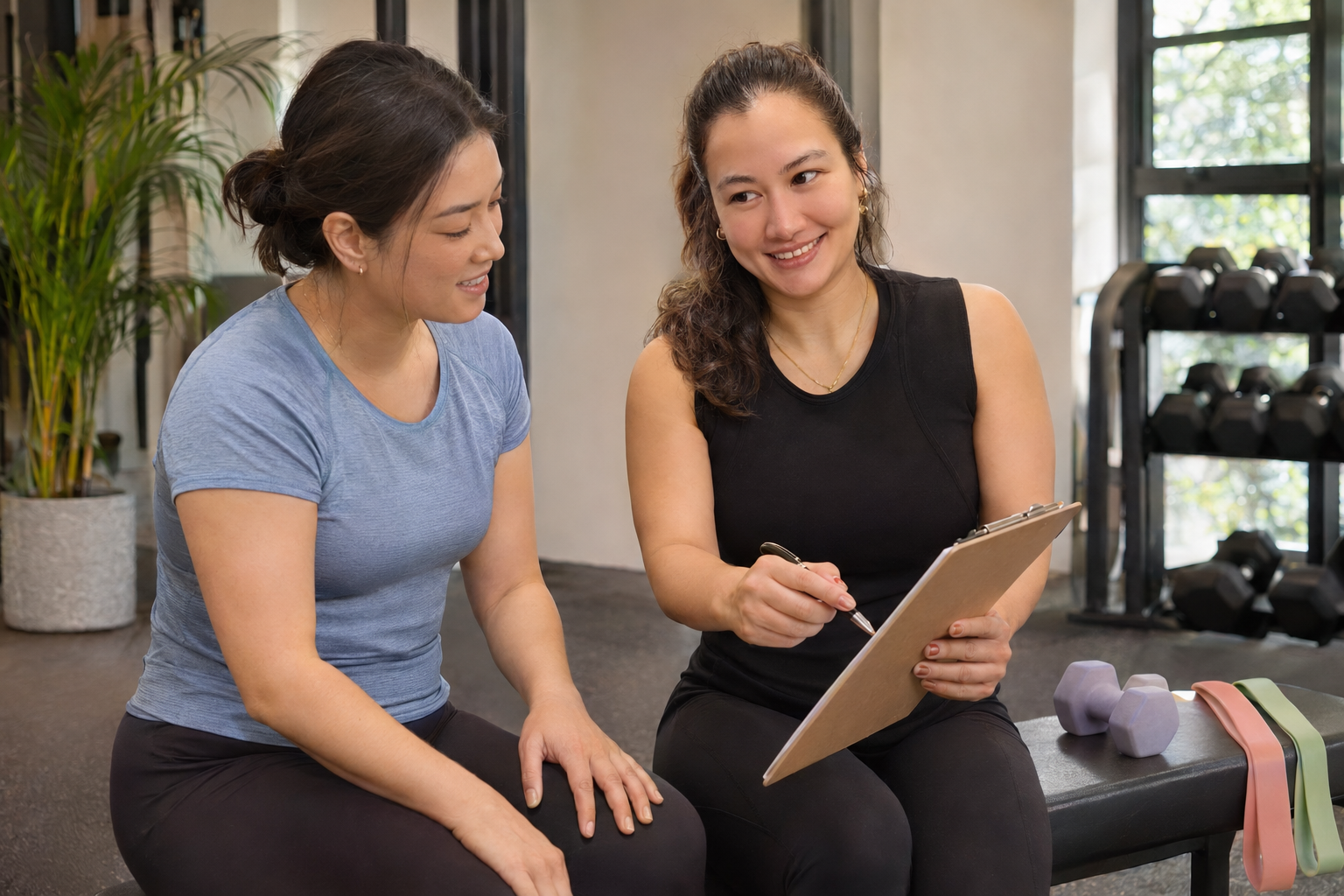
1. A conversation about your goals
Your trainer should first understand why you want to begin.
You may want to build strength, improve general fitness, work towards a body-composition goal, feel more capable in everyday life or learn how to exercise independently. Your schedule, previous experiences and personal preferences also influence the plan.
Goals do not need to be dramatic. “I want to stop feeling lost in the gym” is a valid reason to start.
2. Pre-exercise health screening
Before structured exercise, you should be asked about your health, medications, injuries, symptoms and relevant medical history.
Pre-exercise screening helps an exercise professional identify circumstances that may require changes to your program or guidance from a doctor or allied health professional. It is not a test that you need to pass, and being referred for medical guidance does not necessarily mean you cannot exercise.
Answer screening questions honestly and tell your trainer if your health changes later. If you have an injury, significant pain, a chronic condition or unexplained symptoms, your trainer may request clearance or information from the healthcare professional managing your care.
3. A simple starting-point assessment
An initial assessment does not need to be an exhausting fitness test.
Depending on your goals and circumstances, your trainer may observe movements such as sitting to a bench, hinging at the hips, stepping, pushing, pulling or balancing. They may also ask about activities that feel comfortable or difficult in everyday life.
The purpose is to select a suitable starting point—not to judge your body or prove how unfit you are.
What happens during your first personal training session?
Every trainer works differently, but a beginner session will often include the following elements.
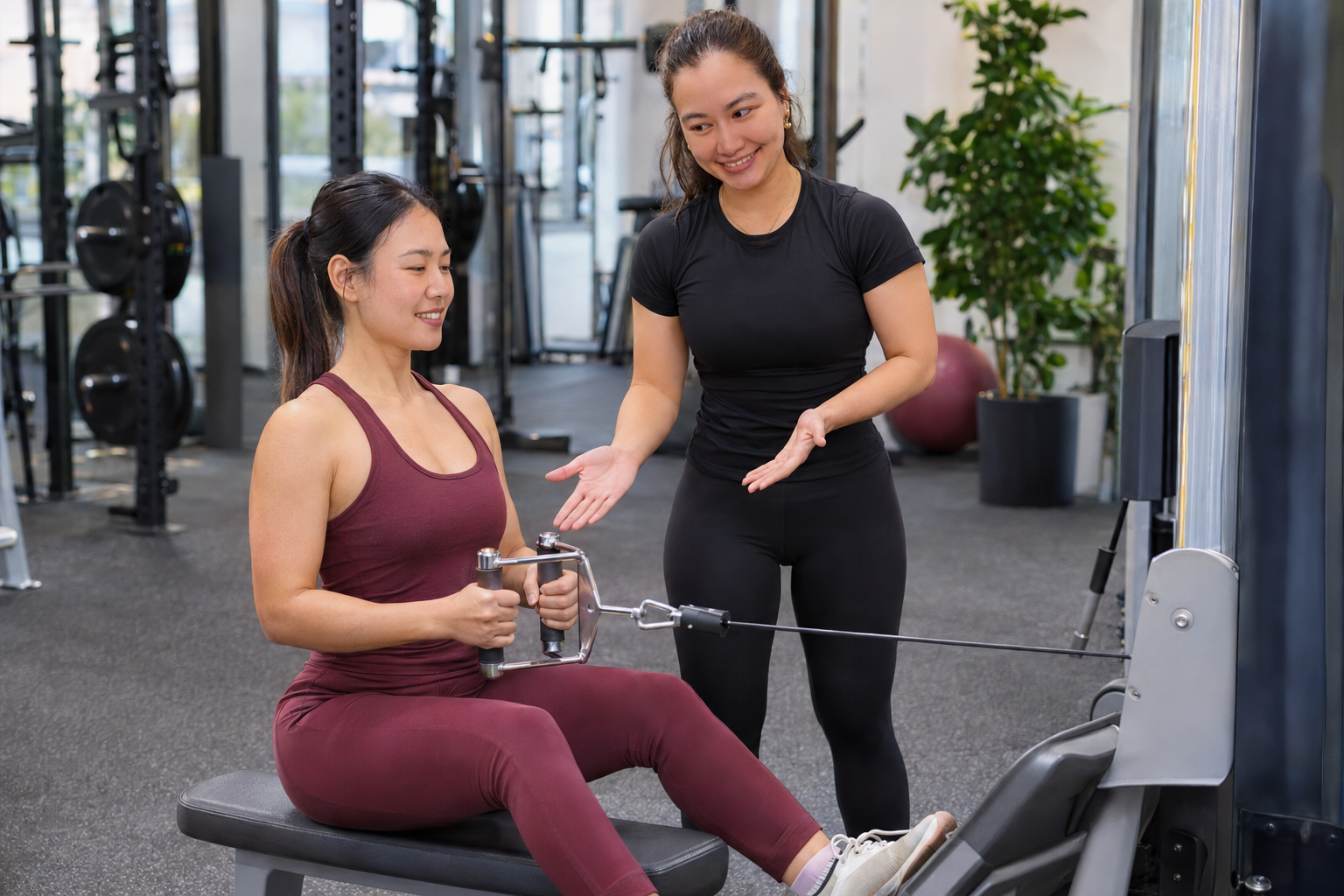
An explanation of the plan
You should know what you are doing and why. Your trainer may explain the session structure, the equipment being used and how each exercise connects with your goals.
Clear explanations are especially important for beginners. You should feel able to ask for another demonstration or a simpler explanation.
A gradual warm-up
The warm-up may include easy cardio, mobility exercises or practice versions of movements that appear later in the session. It should prepare you for the planned activity rather than leave you exhausted before the main exercises begin.
Fundamental strength exercises
A beginner strength session may introduce movements such as:
a box squat or supported squat
a hip hinge or light deadlift variation
a seated row or cable pull
a machine or dumbbell press
a step-up or supported split-stance exercise
a simple core stability movement
These are examples, not a compulsory list. Exercise choice should depend on your ability, health information, comfort and goals.
The Australian Government’s movement guidelines recommend muscle-strengthening activity on at least two days each week for adults. That does not mean a beginner must immediately complete two difficult gym workouts. Your total routine can be built progressively, and your trainer can help determine what is realistic for you.
Technique coaching
Your trainer may adjust your stance, range of motion, breathing, equipment position or speed. Technique coaching should be constructive and understandable—not a stream of criticism.
It is normal for a new movement to feel unfamiliar. Coordination develops through practice.
Appropriate effort and rest
Your first session should not be a punishment. More soreness does not automatically mean the workout was more effective.
Your trainer should watch how you move, ask how the exercise feels and adjust the load or rest period when needed. As you become more familiar with training, exercises can progress gradually.
Will a beginner personal trainer make you do burpees or run?
Not necessarily.
There is no single beginner workout that suits everyone. A personal training session should not be built around exercises you dislike merely because they look intense.
If running, jumping, kneeling or getting down to the floor is uncomfortable, tell your trainer. An exercise can often be replaced or modified while still working towards the purpose of the session.
You should also report sharp pain, dizziness, numbness, unusual shortness of breath or feeling unwell. Exercise can feel challenging, but concerning symptoms should not be ignored.
How hard should beginner training feel?
You should expect some effort, but the session should remain appropriate to your experience.
Early training is partly about learning. If every set is taken to complete exhaustion, it becomes harder to focus on movement quality and understand what your body is doing.
A sensible first phase may emphasise:
controlled repetitions
manageable resistance
consistent technique
enough rest to repeat the exercise well
recognising the difference between muscular effort and pain
leaving the session feeling capable of returning
Over time, the program can become more challenging through additional resistance, repetitions, sets, range of motion or more complex variations. Progression should be earned through readiness—not rushed to meet an arbitrary timeline.
How often should a beginner see a personal trainer?
There is no universal answer.
One personal training session per week may provide enough instruction and accountability if you can complete simple independent activity between appointments. Two weekly sessions may suit someone who wants more supervised practice or does not yet feel confident training alone.
The best frequency depends on:
your goals
exercise experience
weekly availability
recovery
confidence training independently
budget
other physical activity
Your coached-session frequency is not necessarily the same as your total activity frequency. Walking, mobility work, a simple home session or independently repeating familiar exercises may form part of your broader week.
Avoid choosing a schedule that looks ideal on paper but is impossible to maintain. Consistency with a realistic plan is more useful than an ambitious routine that ends after two weeks.
What should you wear and bring?
For a standard gym-based personal training session, bring:
comfortable exercise clothing
supportive training shoes
a water bottle
a small towel if the venue requires one
any relevant medical or allied-health guidance requested by your trainer
your glasses, hearing support or other items you need to follow instructions comfortably
You do not need expensive activewear or a completely new gym wardrobe. Wear something that allows you to move comfortably and makes you feel at ease.
Ask about gym entry before attending. A personal training fee may not include gym membership, a casual visit or another facility-access charge.
What if you feel self-conscious in the gym?
Feeling watched is common when an environment is unfamiliar. Most gym users, however, are focused on their own workouts.
One-to-one coaching can reduce uncertainty because you have a clear plan and someone guiding the equipment setup. Your trainer can also select a quieter area or a straightforward exercise sequence where the venue and appointment allow it.
Tell your trainer if confidence is a concern. The way a session is delivered matters as much as the exercises selected.
Confidence does not have to come before action. It often develops after repeatedly completing small, manageable actions.
How to choose a personal trainer for beginners in Sydney
Qualifications matter, but so does the way the trainer communicates.
Before committing, consider asking:
Do you regularly coach beginners or people returning after a break?
What happens during the first session?
How do you adapt exercises if something feels uncomfortable?
Do you complete pre-exercise screening?
Will you explain how to use the equipment?
Can sessions focus on learning technique and confidence?
Is programming between sessions included or separate?
What are the payment, cancellation and package conditions?
Does the training fee include access to the gym?
Where are sessions held, and what appointment times are available?
Be cautious of guaranteed transformations, fixed promises about weight loss or pressure to buy a large package before the service has been explained clearly.
A trainer cannot guarantee a particular physical result or timeline. Progress is influenced by many factors, including attendance, effort, activity outside sessions, nutrition, recovery, health and changing life circumstances.
Personal training, online coaching or group fitness: which is best for a beginner?
The best format depends on the support you need.
Personal training
Private personal training may be the strongest starting point if you want hands-on instruction, immediate technique feedback and help becoming familiar with gym equipment.
Online coaching
Online coaching may suit a beginner who already has access to equipment and is comfortable following exercise demonstrations but wants a personalised program, check-ins and accountability. Some complete beginners prefer to learn key movements in person before moving into more independent training.
Group fitness
Group classes can provide energy, variety and community. However, the instructor must divide attention across the class. If you feel overwhelmed by fast transitions or need substantial individual guidance, private coaching may help you build foundations first.
These formats do not have to be permanent choices. You might begin with personal training, later complete some sessions independently and use classes or online coaching as your confidence grows.
Starting beginner personal training with Vera Yazid
Vera Yazid provides personalised one-to-one training for beginners, returning exercisers and clients who want greater confidence with strength and gym-based exercise.
Sessions begin from your current ability. Exercises can be adjusted around your experience, goals and screening information, with clear instruction and gradual progression.
Private personal training appointments are available at selected Sydney locations, subject to Vera’s schedule and facility access. Current locations, appointment lengths, prices and gym-entry requirements should be confirmed through the booking page before attending.
If you want support beyond individual appointments, Vera also offers online and hybrid coaching with personalised programming, accountability and progress tracking.
Ready to begin? Explore Personal Training with Vera Yazid or view current appointment availability.
You do not need to arrive confident, experienced or already fit. You only need a suitable starting point and a plan you can realistically continue.
Exercise suitability is assessed individually. Personal training is not medical treatment, physiotherapy or injury rehabilitation. Medical or allied-health guidance may be requested where appropriate. Individual experiences and results vary.
Frequently asked questions
Is personal training good for complete beginners?
Yes. One-to-one personal training can help a complete beginner learn basic gym equipment, exercise technique and how to structure a manageable workout. The session should be adapted to the person’s current ability and relevant health information.
Do I need to get fit before hiring a personal trainer?
No. You do not need to improve your fitness before beginning. Understanding your current starting point helps a trainer choose suitable exercises, effort levels and progressions.
What happens at a first personal training session?
A first appointment commonly includes a discussion about your goals and experience, pre-exercise screening, a simple starting-point assessment and a beginner-appropriate workout. The exact format varies between trainers and should be adapted to you.
How many personal training sessions does a beginner need?
There is no fixed number. Some beginners see a trainer once weekly and complete simple activity independently, while others prefer two supervised sessions. The right frequency depends on your goals, schedule, confidence, recovery and budget.
Will I be very sore after my first PT session?
Some temporary muscle soreness can occur after unfamiliar exercise, but severe soreness is not the goal of a first session. Training should be introduced progressively. Seek appropriate medical advice if you experience severe pain, significant swelling, dark urine or other concerning symptoms.
Can I have a personal trainer if I have an injury or health condition?
Possibly, but you should disclose the condition during screening. Depending on your circumstances, the trainer may modify exercise or request guidance from your doctor, physiotherapist or another appropriate health professional. Personal training does not replace medical treatment or rehabilitation.
Is gym membership included with personal training?
Not always. Gym membership, casual entry or another facility-access arrangement may be separate from the trainer’s fee. Confirm this before booking.
Where does Vera offer beginner personal training in Sydney?
Vera offers appointments at selected Sydney locations. Because location availability may change, check the Personal Training page or booking system for the current venue and access requirements before booking.